
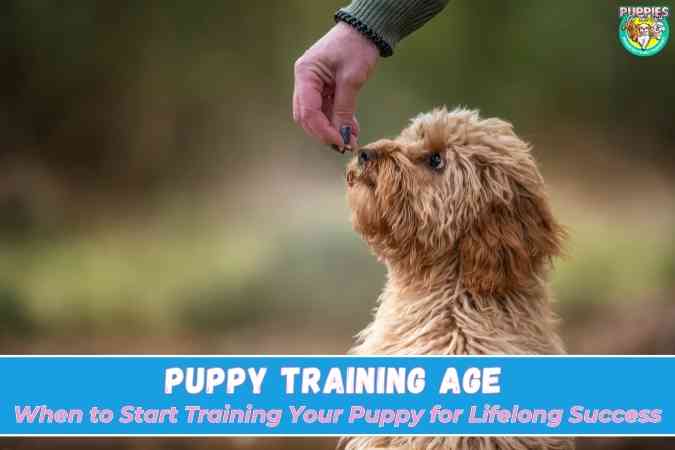
How Early Should I Start Training My Puppy?
If you’ve ever watched a puppy tilt their head at the sound of your voice—eyes wide, tail wagging like a tiny metronome—you’ve seen the moment learning begins. Many new puppy parents assume training starts weeks or months after bringing a puppy home. The truth is simpler and far more powerful:
Training begins the moment your puppy enters the world.
At Puppies on the Gulf, we’ve spent nearly 30 years raising Cavapoo, Shihpoo, Cavapoochon, and Cavalier puppies with one guiding belief: the earliest days shape the lifetime bond. This article answers one of the most common questions we hear—How early should I start training my puppy?—and gives you practical, step-by-step guidance backed by research, experience, and our in-house training support.
Puppy Training Age: When Does Training Really Start?
Short answer: Day one.
Better answer: Before you ever meet your puppy.
Think of your puppy’s brain like soft clay—warm, moldable, and eager to take shape. In the first 8–16 weeks, puppies experience a critical learning window where habits, confidence, and emotional resilience are formed. Waiting to train is like letting the clay dry before you touch it.
What science and experience agree on
- Puppies are learning constantly, even when no one is “teaching.”
- Early experiences influence confidence, anxiety levels, and adaptability.
- Gentle structure early on reduces fear-based behaviors later.
At Puppies on the Gulf, we begin this process through family-raised care, early socialization, and Puppy Culture–based training—long before your puppy comes home.
Puppy Training Age & Week-by-Week Foundations
Q: What happens in the first 0–8 weeks?
This is where Puppy Training Age truly begins.
During this phase, puppies learn:
- How humans feel, smell, and sound
- That handling is safe and comforting
- That new experiences don’t equal danger
Our puppies are raised underfoot in a real home—not a kennel—so everyday sounds (vacuum cleaners, doors, voices) become normal, not scary.
In-house tip:
We practice gentle handling daily—paws, ears, mouths—so future grooming and vet visits feel routine instead of traumatic.
Q: Can puppies learn before they come home?
Absolutely—and they should.
Using early neurological stimulation and confidence-building exercises:
- Puppies develop emotional resilience
- Stress tolerance improves
- Curiosity replaces fear
This is why families who bring home Puppies on the Gulf puppies often tell us, “They adapted faster than we expected.”
That’s not luck. That’s intentional early training.
The “Goldilocks Zone”: 8–12 Weeks
This is the sweet spot—not too early, not too late.
What your puppy is ready for:
- Name recognition
- Potty routine foundations
- Gentle crate exposure
- Sit, come, and eye contact
- Positive leash introduction
Training here should feel less like boot camp and more like guided play—short sessions, lots of praise, zero pressure.
Metaphor moment:
Training a puppy at this age is like teaching a toddler language. You don’t expect speeches—you celebrate first words.
Puppy Training Age & Socialization: Why It Matters More Than Tricks
Many people think training equals commands. In reality, socialization is the cornerstone.
Q: What does proper socialization include?
- Different people (ages, voices, appearances)
- Safe surfaces (tile, grass, carpet)
- New sounds at controlled levels
- Calm exposure to other dogs
A well-socialized puppy grows into a dog that can walk into a café, a vet office, or a family gathering without stress.
This is especially important for Cavapoos, Shihpoos, Cavapoochons, and Cavalier King Charles Spaniels, breeds known for their emotional sensitivity and people-focused nature.
Puppy Training Age & Emotional Intelligence
Because these breeds often become therapy and emotional support companions, we emphasize emotional regulation early.
Our internal training focus includes:
- Frustration tolerance (waiting calmly)
- Recovery from mild stress
- Confidence without overdependence
A puppy who learns how to self-soothe becomes an adult dog who can adapt anywhere.
Common Mistakes to Avoid
❌ Waiting too long – Bad habits form silently. Prevention is easier than correction.
❌ Overtraining – Long sessions overwhelm young brains. Keep it short, positive, and frequent.
❌ Inconsistency – Puppies thrive on patterns. Mixed signals create confusion.
❌ Harsh corrections – Fear blocks learning. Trust accelerates it.
At Puppies on the Gulf, our philosophy is simple: train the relationship first.
Our Lifetime Support Advantage
When you bring home a puppy from Puppies on the Gulf, you’re not on your own.
Our in-house training support includes:
- Transition guidance for the first weeks at home
- Potty and crate training frameworks
- Behavior questions answered by experienced professionals
- Lifetime support—because puppies grow into dogs
We believe ethical breeding doesn’t stop at pickup day. It’s a long-term commitment to your family and your dog’s well-being.
Final Answer: So… How Early Should I Start Training My Puppy?
The best Puppy Training Age is now.
Training begins with touch, tone, routine, and trust—long before commands.
When early foundations are done right, obedience becomes easier, bonding becomes deeper, and your puppy grows into exactly what you hoped for: a calm, confident, loving companion.
That’s the Puppies on the Gulf difference.
Special thanks to the following source(s) for the image(s) used in this article: The Fallible Man LLC